Connecting wellness memberships to visit capacity and cash
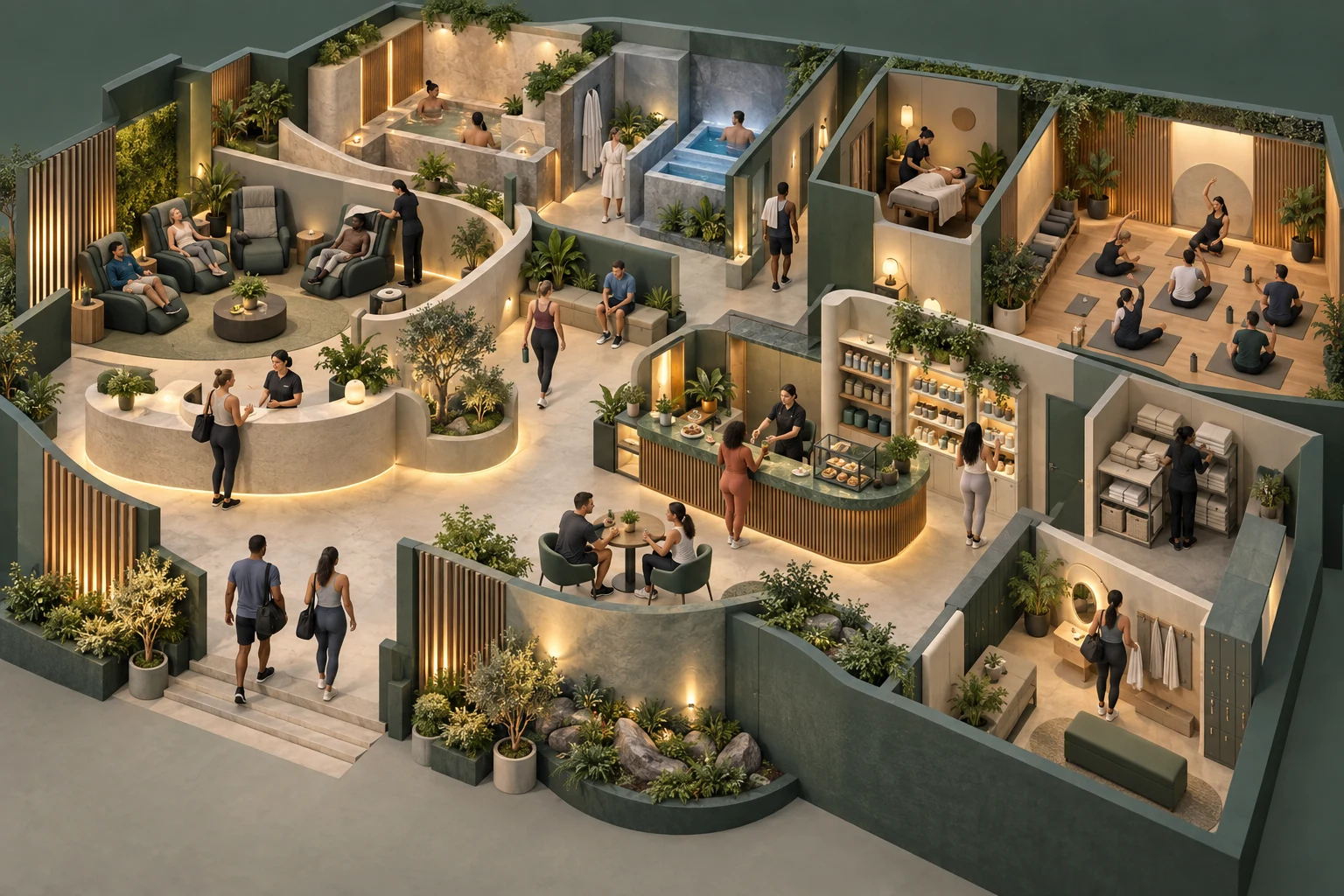
A proposed recovery and wellness club combined recurring memberships with private and corporate sessions, café and retail. The engagement was scoped to connect member growth and visit behavior to physical capacity, staffing, opening investment and funding.
Acquisition, retention and visit frequency turn recurring accounts into service demand.
Room, equipment and session availability determine how much demand can be served.
Memberships, sessions, café and retail require distinct volume and margin drivers.
Opening investment and working capital arrive before stable utilization.
WHY THIS WASN’T A TEMPLATE EXERCISE
The proposed system
had to respect how the business would move.
The reconstructed architecture separates member cohorts, visits, service capacity, session types and ancillary spending, then connects them to staffing, capital expenditure, working capital, funding and scenarios.
Membership count was not the same as service demand
Two member bases of the same size could create very different operating pressure when retention, visit frequency, service mix and timing changed.
Capacity depended on the service being used
A shared recovery area, a private appointment and a group session could each carry different duration, turnover, room, equipment and staff constraints.
Peak periods could set the real staffing burden
Average utilization could look comfortable while concentrated visits still created waiting, coverage and service-quality pressure during the busiest windows.
Ancillary sales needed their own economics
Café, retail and private or corporate sessions could add contribution, but only after participation, pricing, product cost and delivery effort were separated from membership revenue.
The venue required cash before demand stabilized
Fit-out, equipment, staffing, depreciation, working capital and funding timing had to be visible before the membership ramp was assumed to cover the cost base.
The first location had to work before expansion
A reusable structure could support later sites, but it could not turn an unproven first-location case into guaranteed scale.
SCOPED DECISION ARCHITECTURE
From operating mechanics
to a decision-ready package.
These reconstructed layers show how the proposed model, plan and presentation could keep demand, capacity, operations and funding aligned.
Membership acquisition and retention
New joins and churn form member cohorts rather than a single cumulative headline, keeping recurring revenue and the active base traceable.
Visit frequency and service mix
Active members translate into visits, while corporate, private and other demand enter through their own operating paths.
Room, equipment and session capacity
Duration, usable slots, turnover and utilization connect forecast demand to the practical ability to serve it.
Revenue and direct contribution
Memberships, sessions, café and retail use separate prices, volumes and direct-cost assumptions before they combine.
Staffing and operating coverage
Service activity and opening hours inform role-based headcount, payroll and coverage needs instead of leaving labor as a flat percentage.
Opening investment and working capital
Fit-out, equipment, depreciation, supplier timing and other opening requirements establish the cash needed before steady operations.
Funding, tax and integrated statements
Equity, shareholder support and other funding can be tested alongside relevant indirect and corporate-tax assumptions in linked statements.
Scenarios and value-driver sensitivity
Downside, base and upside cases expose how membership, utilization, pricing, cost and timing can change cash, payback and investor metrics.
Plan and investor-story alignment
The operating logic, market context, funding need and investment case can then use the same assumptions across the business plan and presentation.
WHAT THE ANALYSIS SURFACED
Useful answers,
without exposing client data.
The takeaways are intentionally qualitative. Exact assumptions, calculations and outputs remain inside the confidential client source materials.
Retention mattered twice
It supported recurring membership revenue, but it also carried continuing visit demand into constrained service areas and the staff schedule.
Average utilization could hide the operating bottleneck
Capacity needed to be tested by service and period because a busy appointment type or peak window could constrain the member experience before the venue looked full overall.
More visits were not automatically better economics
Higher engagement could support ancillary spending and member value, yet it could also require more staff, equipment turnover and capacity if service use rose faster than contribution.
Opening capital and operating cash belonged on one timeline
A fit-out budget did not answer the funding question by itself. The case also needed the cash consumed while membership and utilization were still ramping.
One operating logic could support three investor materials
A model, business plan and pitch deck could remain consistent when membership, capacity, staffing, investment and scenarios came from the same decision architecture.
SCOPED WORKING APPROACH
The proposed system
behind the answer.
- Membership acquisition, retention and recurring-revenue framework
- Visit-frequency and service-mix demand schedule
- Room, equipment, appointment and group-capacity logic
- Café, retail, corporate and private-session revenue schedules
- Role-based staffing, payroll and operating-cost structure
- Opening capital expenditure, depreciation and working-capital plan
- Funding, tax and integrated three-statement architecture
- Downside, base and upside scenarios with value-driver sensitivity
- Business-plan structure grounded in the operating case
- Investor-presentation flow aligned with the funding decision
CASE CONFIDENTIALITY
This anonymized case explains the membership, visit-demand, service-capacity, revenue-mix, staffing, opening-investment and funding logic without naming the client, concept, contractor, advisers, location or dates. Exact scope, schedule, fee, payment, tax, market, competitor, operating, financing, valuation and sensitivity details remain private because client work can be confidential or NDA-protected. No source document, signature, file name, quotation, logo, client input, formula, screenshot or proprietary term is reproduced. The statement of work was reviewed as evidence of intended scope, not as proof of delivery, approval, forecast accuracy, business launch, financing or realized results. The illustration is an original fictional wellness club rather than a real venue, client asset, medical claim or completed project.